Release without visibility
Packaging may be empty and available but remain invisible to the recovery team.
An application story focused on coordinating empty release, pickup, consolidation, inspection, repair and reissue.
The challenge
Without a controlled return journey, packaging can wait at consumption points, miss pickup or return without being ready for reuse.
Packaging may be empty and available but remain invisible to the recovery team.
Uncoordinated collections increase dwell, missed pickups and inefficient reverse movement.
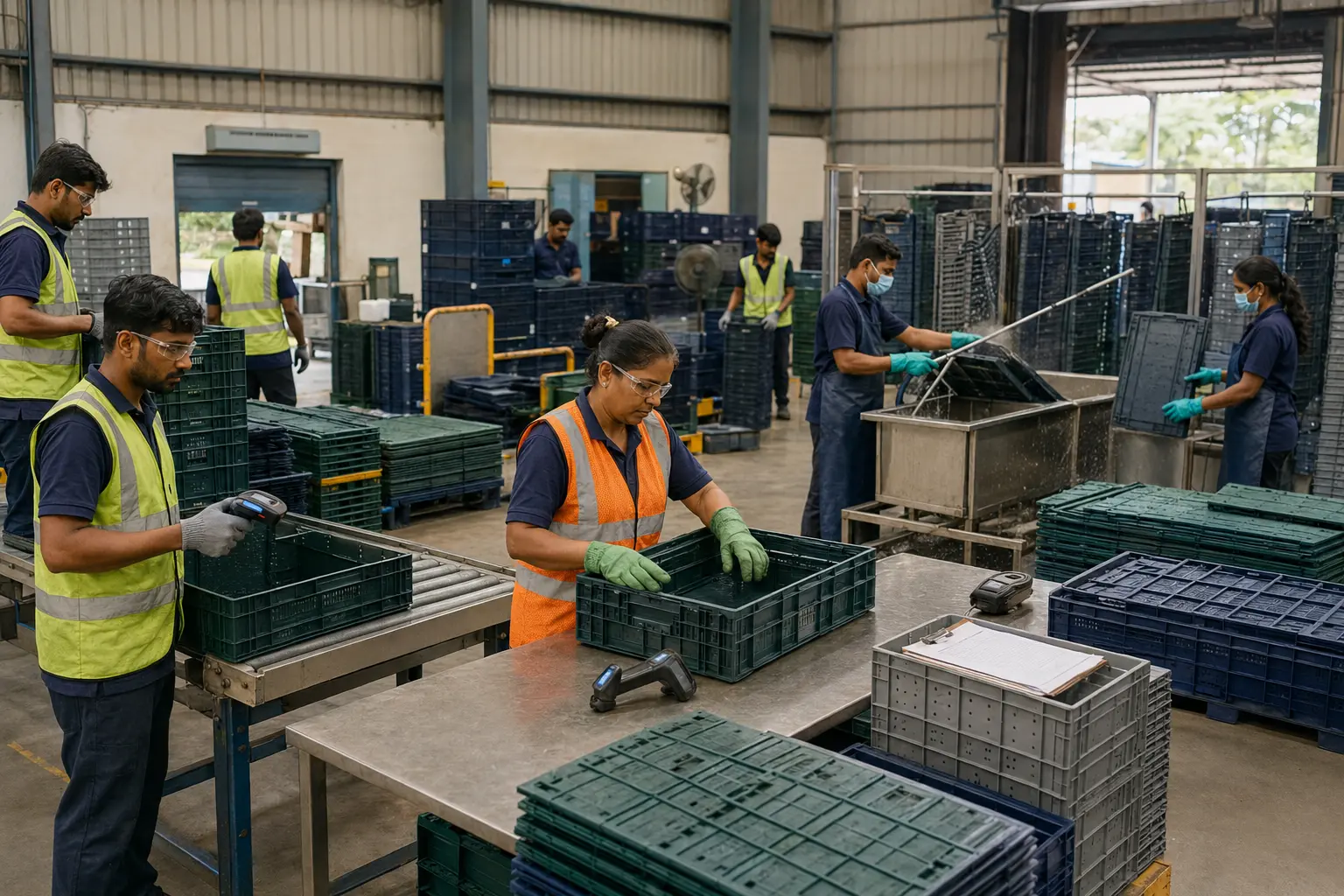
Recovered packaging still needs inspection, cleaning and repair before production can use it again.
Impact response
The return journey is mapped with the same discipline as the forward movement.
Confirm when empty assets are ready at each consumption point.
Align pickup cadence, consolidation and route ownership.
Inspect, clean and repair through service-center controls.
Return usable packaging where production needs it next.
Operating outcome
The resulting model links empty availability to collection, condition and production readiness.